

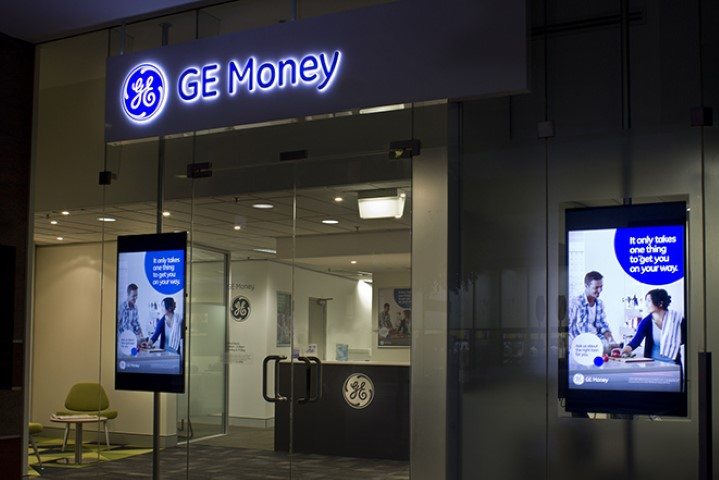


For a brand running signage across hundreds of locations, the most expensive maintenance strategy is the one that looks least expensive day to day: waiting for something to break, then paying to fix it.
Reactive maintenance looks affordable because each repair is a separate, modest invoice. Across a national network, though, those invoices stack up into a cost that rarely shows on any single line – and the repair itself is usually the smallest part of it.
The real spend hides in downtime, brand inconsistency and the hours your team loses coordinating fixes. This article breaks down what reactive signage maintenance actually costs a large network, how a planned model compares, and what signage lifecycle management changes.
The hidden cost of reactive signage maintenance
The invoice for a single sign repair tells you almost nothing about what reactive maintenance really costs. Start with the repair itself. When a sign fails and has to be fixed on short notice, you pay a premium: emergency call-out rates, expedited parts, and a contractor who knows you have no alternative. Multiply that across a network where something is always failing somewhere, and the premium becomes a permanent fixture in the budget.
Then there’s downtime. A dark sign, a flickering illuminated logo or a damaged wayfinding panel is not a neutral state – it’s a location actively presenting your brand at its worst. Every day it stays broken, it works against the brand you have spent years building.
Coordination is the cost almost no one measures. In a reactive model, each fix is handled ad hoc: someone notices a problem, sources a local contractor, chases a quote, approves it, then follows up to confirm the work. Repeated across 200 or 1000 sites, that adds up to a meaningful share of a facilities or marketing team’s week spent managing signage instead of doing the work they were hired for.
Reactive maintenance also guarantees inconsistency. Different contractors, different materials and different standards at each location mean the same brand slowly drifts out of alignment across the network. What you’re really paying for is a brand that looks a little less like itself every quarter.
Planned vs reactive signage: Two operating models
Reactive and planned signage maintenance are not two points on a spectrum – they’re two different operating models, and most networks are running the wrong one by default.
The reactive model is a break-fix cycle. Spend is unpredictable, because you can’t budget for failures you haven’t had yet. There’s no data trail, so you can’t see which sites fail most, which materials underperform, or where the money actually goes. And because every repair is handled in isolation, standards drift and the brand fragments.
The planned model inverts all of that. Maintenance is scheduled against the known lifecycle of each asset, so problems are caught – or pre-empted – before they become emergencies. Spend becomes forecastable, because inspections and refresh cycles are planned rather than sprung on you. Standardization is built in, because the same specifications and quality checks apply at every site. And every intervention is recorded, so the network starts generating data you can act on.
The difference shows up most clearly at scale. On a handful of sites, reactive maintenance is merely inefficient. Across a national footprint it compounds: more premium call-outs, more downtime, more coordination hours and more brand drift, all growing with every location you add. A planned model does the opposite, getting more efficient per site as the network grows and the data deepens. The real question for a large network isn’t whether planned maintenance is better – it’s how much the reactive default is quietly costing.
What signage lifecycle management actually means
Signage lifecycle management is the discipline of managing every branded asset across its full life – design, fabrication, installation, ongoing maintenance, refresh and eventual replacement – as one continuous program under a single accountable partner, rather than as a string of disconnected jobs.
That distinction matters. A one-off repair fixes a sign. Lifecycle management manages the asset: it knows when the sign was installed, what condition it’s in, when it’s due for attention and what it will take to keep it performing. Applied across a network, this becomes brand asset maintenance at a program level – every sign, light and branded element tracked and maintained to one consistent standard.
Two things make this work at national scale.
- The first is visibility. SignManager’s Signifi platform gives you a real-time view of every asset across the network – status, history and upcoming work in one place – so decisions are driven by data rather than by whichever complaint reached you most recently.
- The second is single-point accountability. Instead of managing a patchwork of local suppliers, you have one partner coordinating a prequalified national contractor network and holding the standard steady from California to Tennessee
Because SignManager is independent and manufacturer-neutral, that coordination isn’t tied to anyone’s products or margins – the recommendation is simply the one that serves the asset and the brand. You can see how this is delivered through SignManager’s signage maintenance program.
What a lifecycle approach delivers across a large network
Moving from reactive fixes to managed brand asset maintenance changes the numbers, not just the process. Across their networks, SignManager clients report:
- Up to 40% lower maintenance costs, as premium emergency call-outs give way to planned, competitively sourced work.
- 30% fewer outages, because assets are maintained before they fail rather than after.
- 80% faster response times when issues do arise, thanks to a coordinated national network and clear visibility of every site.
- 75% less time spent coordinating vendors, as a single point of contact absorbs the sourcing, scheduling and follow-up
Read together, these point to one outcome: a network that stays consistently on-brand, costs less to run and asks far less of your internal team. That’s the return on lifecycle management – not a lower repair bill, but a signage estate that protects brand integrity at scale and gives the people responsible for it something reactive maintenance never can.
Ready to make the shift? Here’s where to start
You don’t have to overhaul your entire signage program to find out whether a lifecycle approach is worth it. The most useful first step is simply understanding what your current network is really costing you and where it’s drifting.
SignManager offers a complimentary brand assessment for exactly this: an independent audit of your signage estate that benchmarks its condition, consistency and true running cost, so any decision to change is grounded in evidence rather than assumption. It’s a considered, obligation-free way to see the gap between what you are spending reactively and what a managed program would cost.
If reactive maintenance has been quietly draining your budget and diluting your brand, that’s the place to start. Explore SignManager’s advice and consulting services, or request your free brand assessment to see what a lifecycle approach could recover.